
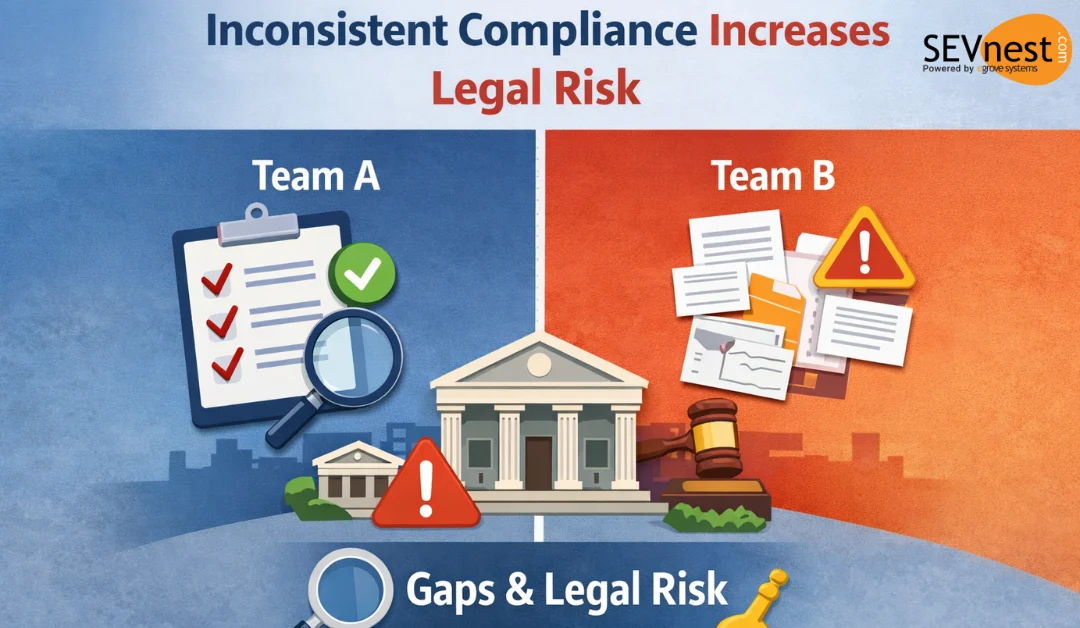
Compliance is the practice of following established rules, policies, and legal requirements in day-to-day operations. Legal risk arises when these obligations are not followed correctly or are applied unevenly across the organization.
In many workplaces, compliance lacks structure. One team may strictly follow procedures, while another overlooks key steps or delays updates. These inconsistencies create gaps that weaken overall control.
During audits, inspections, or legal investigations, these gaps become highly visible. Even small oversights, if left unaddressed, can escalate into serious legal and regulatory issues.
SEVnest helps organizations bring structure and uniformity to compliance processes, making it easier to identify gaps early and reduce risk proactively.
Why Consistency Matters Legally
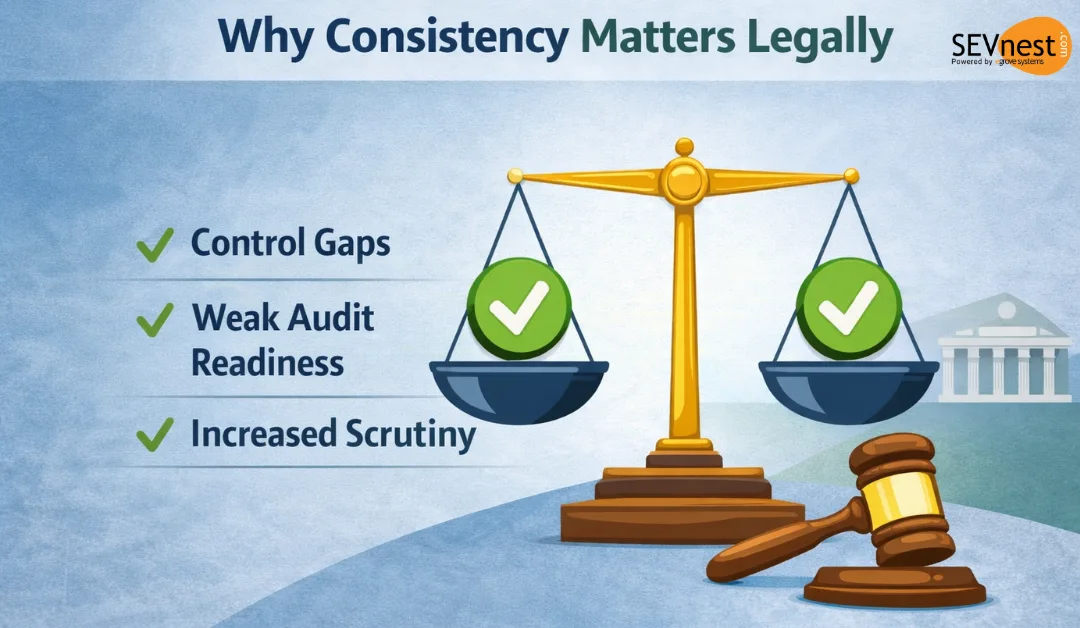
Consistency means applying the same rules, standards, and processes across all teams without exception.
From a legal perspective, this is critical. Regulators and legal authorities expect policies to be enforced uniformly. Any variation in implementation can raise concerns about fairness, accountability, and governance.
When compliance is applied unevenly:
- It creates control gaps
- It weakens audit readiness
- It increases regulatory scrutiny
On the other hand, consistent practices demonstrate that the organization is structured, responsible, and committed to compliance, significantly reducing legal exposure.
Role of Training in Legal Defense
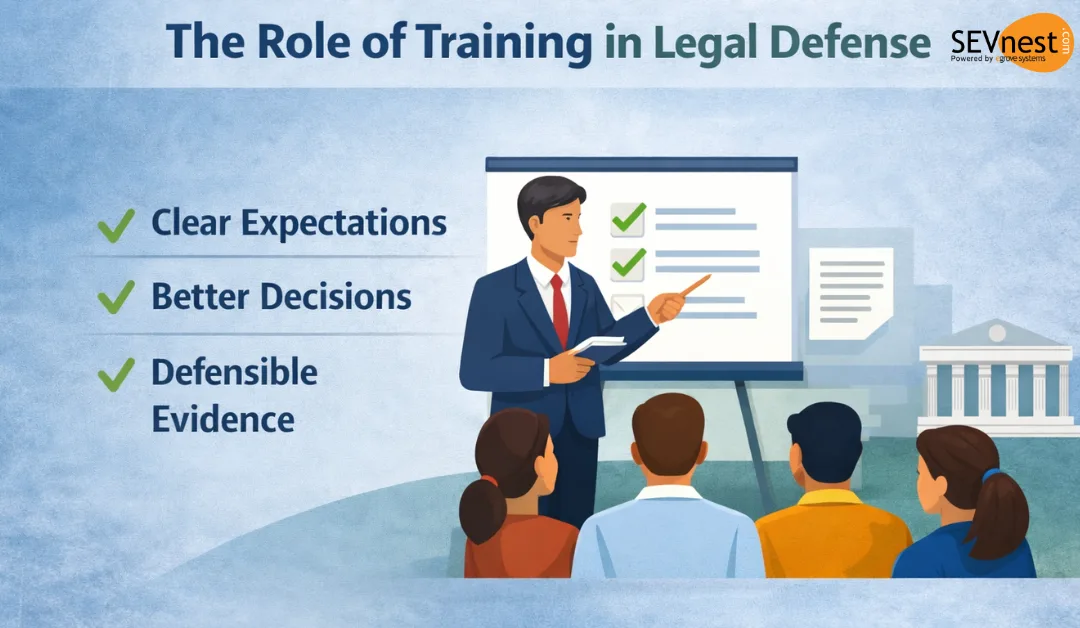
Training is one of the strongest tools for reducing compliance-related risk.
When employees receive structured and consistent training:
- They understand expectations clearly
- They apply policies correctly in real situations
- They make better decisions under pressure
In legal scenarios, training records serve as critical evidence. They show that the organization has taken reasonable steps to educate employees.
However, inconsistent or incomplete training creates blind spots. If some employees are trained while others are not, it becomes difficult to defend the organization’s position.
Well-managed training programs strengthen both compliance and legal defensibility.
Importance of Documentation
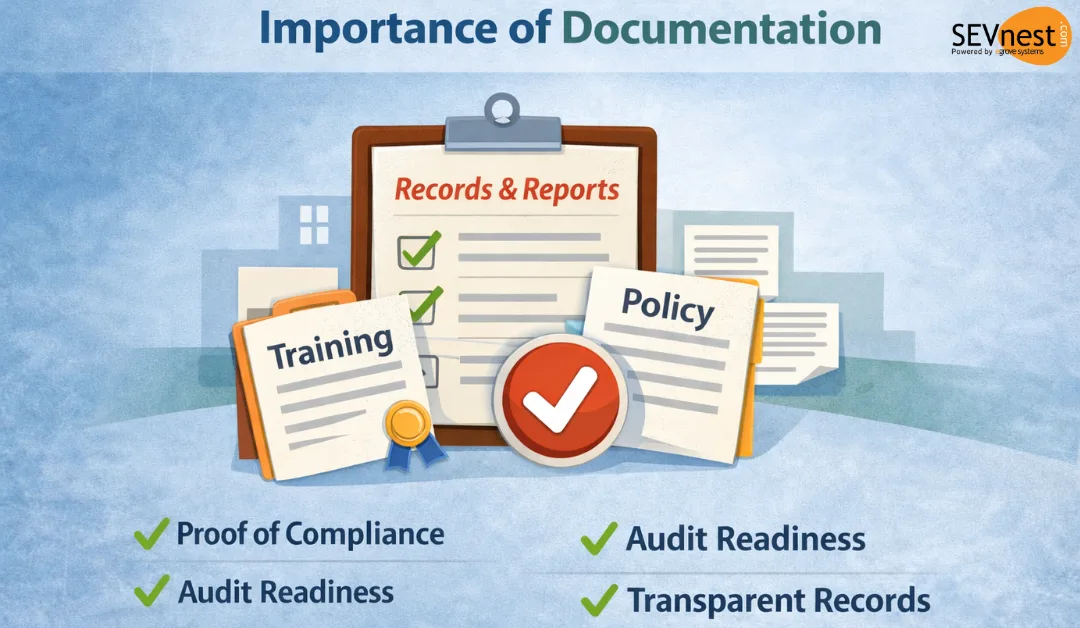
Documentation provides proof that compliance activities have been completed.
This includes:
- Training completion records
- Policy acknowledgments
- Incident reports and corrective actions
Without proper documentation, even completed actions cannot be verified. During audits or investigations, this lack of evidence can significantly increase legal risk.
Clear and organized documentation ensures transparency, supports audit readiness, and protects the organization when scrutiny arises.
Real-World Risk Scenario
Consider an organization where compliance practices vary across departments. One team completes all required training and follows updated policies, while another delays or ignores them.
If a complaint arises from the non-compliant team, the organization may struggle to demonstrate consistent enforcement of policies.
This inconsistency raises serious concerns:
- Why were the rules not applied equally?
- Was there a failure in oversight?
Such gaps can lead to penalties, reputational damage, and loss of trust with regulators.
This is how small inconsistencies evolve into significant legal risks.
How to Reduce Legal Risk
Reducing legal exposure requires a structured and consistent approach to compliance.
Key actions include:
- Delivering standardized training across all teams
- Keeping policies clear, updated, and accessible
- Communicating changes uniformly
- Maintaining complete and accurate records
- Conducting regular compliance reviews and audits
Consistency across these areas strengthens control, improves audit readiness, and minimizes regulatory risk.
How SEVnest Helps
SEVnest enables organizations to build a structured and consistent compliance framework.
With SEVnest, organizations can:
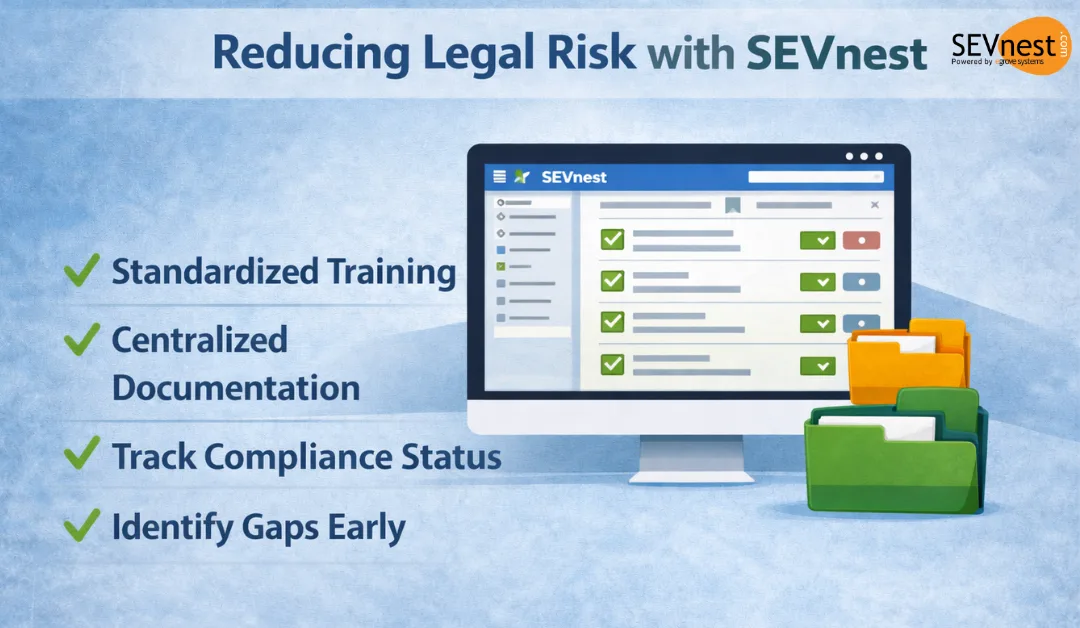
- Standardize training across all employees
- Track completion and monitor compliance status
- Maintain centralized and audit-ready documentation
- Identify and address compliance gaps early
This structured approach not only simplifies compliance management but also strengthens legal defensibility.
By ensuring consistency at every level, SEVnest helps organizations reduce risk, improve control, and stay prepared for audits and regulatory scrutiny.