
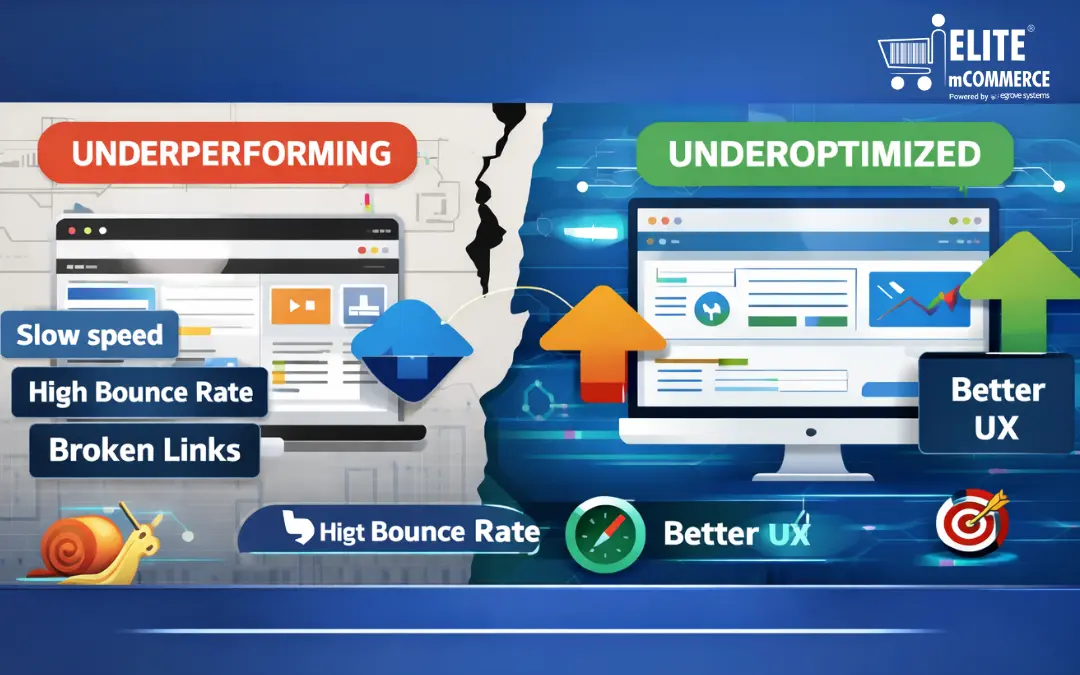
A website that loads slowly, has a high bounce rate, and has a declining conversion rate needs the website optimization. Most businesses think their site is underperforming; however, the reality is that most commonly, it is an underoptimized website.
Today’s websites are not just an online brochure; they are living, breathing ecosystems of design, technology, and psychology. Even the fanciest website in the world won’t convert unless it is documented and the website performance optimization, search, and user intent. So before you build a new website or blame your developers, take a closer look at the metrics. Your website may very well be underoptimized.
Underperforming vs. Underoptimized Websites: What’s the Real Problem?
An underperforming website suggests that there is something essentially and fundamentally wrong with the website, whether it’s the physical content being all wrong, terrible design, broken links, or a horrible backend, the truth is, an underperforming website is broken. An underoptimized website generally looks and feels fine, it is just not tuned up and optimized to reach its greatest potential.
It is like you own a high-end performance car and have never changed the oil or tuned the motor and are wondering why you are not pushing top speed; you may not need a new car.
Optimization bridges the gap between your website’s functionality and performance. The goal of optimization is to make your website better for users, interactions, and conversions. You can do this by using data, insights, and testing to keep testing your website.
Core Website Optimization Elements That Drive Performance
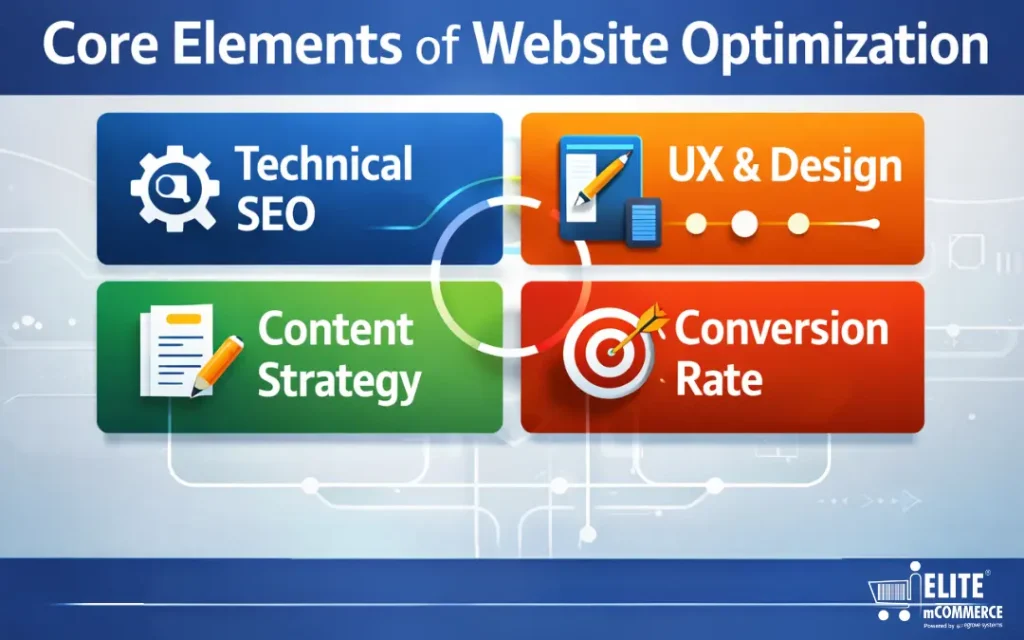
To determine where your site may be under-optimized, you will need to assess four essential elements:
Technical Optimization
Even the most visually stunning site will falter if it lacks an appropriate level of technical optimization. Slow loading times, layouts that don’t work, and orphaned scripts can kill engagement in a matter of seconds.
- Check site speed for optimization using tools like Google PageSpeed Insights.
- Check for mobile-responsiveness, as Google has adopted mobile-first indexing.
- Use proper caching and image compression, and distribute globally using a CDN.
Google Search Console states that the websites optimized for Core Web Vitals rank higher on average.
UX and Design Optimization
Design is not only used to appeal to design preferences; it serves a purpose. A bad user experience can quietly ruin conversions.
- Simplify navigation and make calls to action stand out.
- Reduce friction points in user journeys.
- Use A/B or Multivariate testing on layouts to see what works best for users.
Content Optimization
If your content is not optimized, your message will fall flat, no matter how good it is.
- Write scannable content that uses headers, lists, and imagery.
- Ensure every page has a clear user intent; make sure every page has a clear intent for the user, whether the intent is informational, navigational, or transactional.
- Notice how strong internal links and proper metadata optimization can enhance the visibility of your SEO efforts.
Increasing Conversion Rates
Ultimately, every click should lead somewhere productive. Conversion optimization is different from conversion rate optimization in that it focuses on small changes that will yield strong business results that you can quantify.
- Run heatmaps to visualize where people are clicking and when they are dropping off.
- Streamline checkout and forms.
- Develop compelling, data-driven CTAs that prompt immediate action.
Key Signs: Your Website Is Underoptimized (Not Broken)
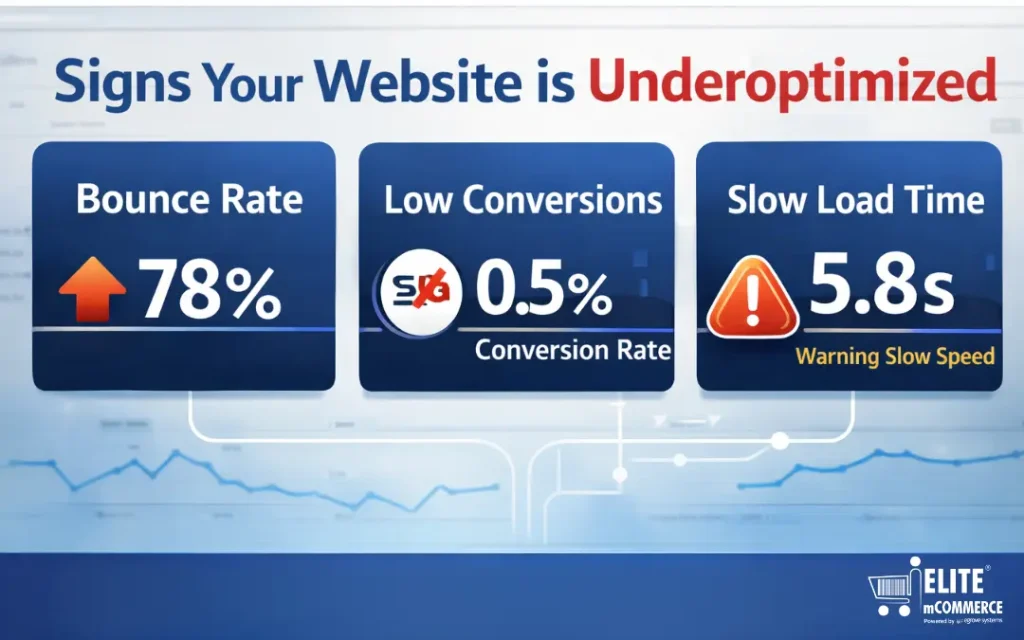
Your website may look great. But these cues often indicate a website that is not optimized:
- Traffic With No Conversions: You have traffic, but no sales or leases.
- High Bounce Rate: people are leaving the page before engaging with your content.
- Slow Load Times: users can drop off as much as 50% or more.
- Engagement is Low: few clicks, low time on the page, and little to no interaction.
- Weak SEO Ranking: getting pushed down by competitors even with good content.
These are not indicators that your website is bad. They are indicators that your website is not tuned to perform at a maximum capacity.
SEO Optimization That Turns Visibility Into Traffic

Search visibility is the most important part of optimization, because it doesn’t matter how pretty the website is if no one can get to it. To help improve SEO:
- Ensure your data is structured to improve the search appearance.
- Optimize long tail keywords with buyer intent in mind.
- Fix broken backlinks and then optimize
- Keep your content fresh and authoritative through regular updates.
Why Continuous Website Optimization Wins Long-Term
Over 60% of all web traffic is coming from mobile devices today, yet website designs are still primarily desktop first. This means you’re:
- Simplifying your design for smaller screens.
- Ensuring fast loads even if connections are weak.
- Creating interfaces that are easy to interact with, even for thumbs.
And don’t forget about accessibility, which doesn’t just mean easily visible but usable by any audience. Accessible websites not only comply with regulations but can also improve SEO and build trust with your users.
Continuous Optimization
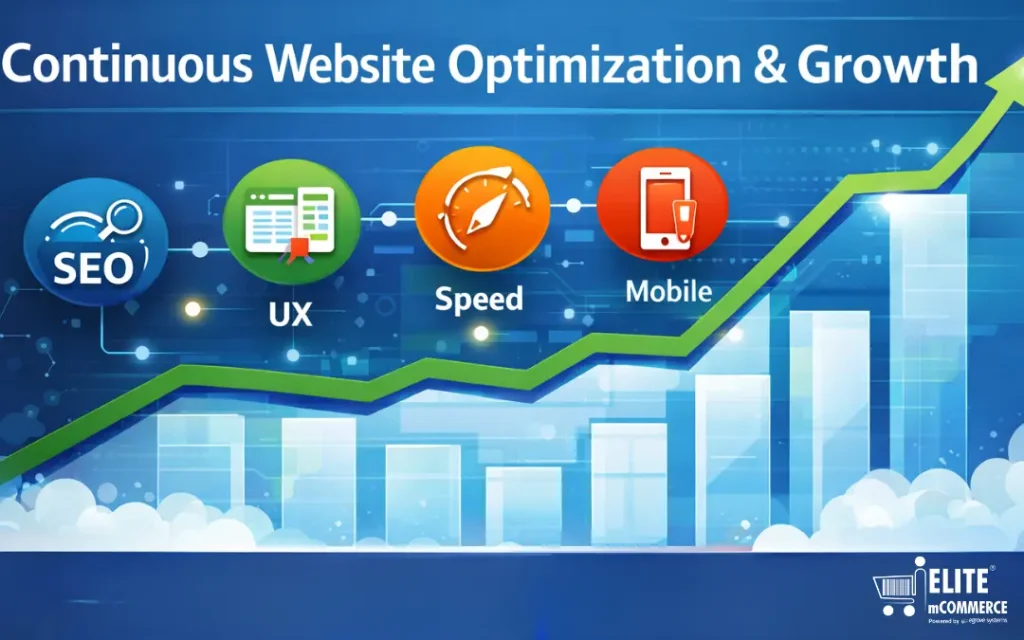
Optimization is about continuously being in optimization mode, which speaks to your ongoing commitment to keep making things better. The digital world is constantly changing, and your users’ expectations change, search algorithms change, and new technologies come out daily. Businesses that change their mindset to continuous optimization often see greater success because they’re in the mindset of not making assumptions about data or user behavior.
How eGrove Systems Helps Fix Underoptimized Websites
Have you been feeling like your website has been cheating you of the kind of numbers it can achieve? Have your thoughts been covered by the idea of an underperforming website with no idea what needs to be done to improve? Then you have landed at the right place. At eGrove Systems, our teams help you understand where your website is lacking. It is probably not underperforming, just underoptimized. The good news is that we can help you optimize your platform and establish simple, continuous optimization practices. Connect with us to learn more.
Optimize, Don’t Rebuild
Your website is not failing. It is simply waiting to be fine-tuned so it can reach its full potential. In a world where milliseconds count in engagement and design trends change overnight, ‘optimizing’ your website is the new competitive advantage. An under-optimized website is not ‘broken’, it is just an opportunity. And with the proper emphasis on data, UX, SEO, and website performance optimization, you can take your website from a digital placeholder to a dynamic engine for growth.