
OSHA compliance training is more than a regulatory requirement in 2026; it is a business necessity. As workplace risks evolve and regulatory scrutiny increases, organizations must ensure employees understand safety standards, reporting protocols, and hazard prevention practices.
OSHA compliance training helps to keep the workplace safe by making everyone in the company more aware of their responsibilities. Rather than reacting to incidents, businesses can proactively reduce risk exposure. Understanding how OSHA compliance training reduces workplace incidents helps leadership move from basic rule enforcement to structured prevention strategies. SEVnest supports organizations by delivering structured mandatory safety training programs designed to strengthen compliance confidence and operational stability.
Understanding OSHA Compliance Training Requirements in 2026
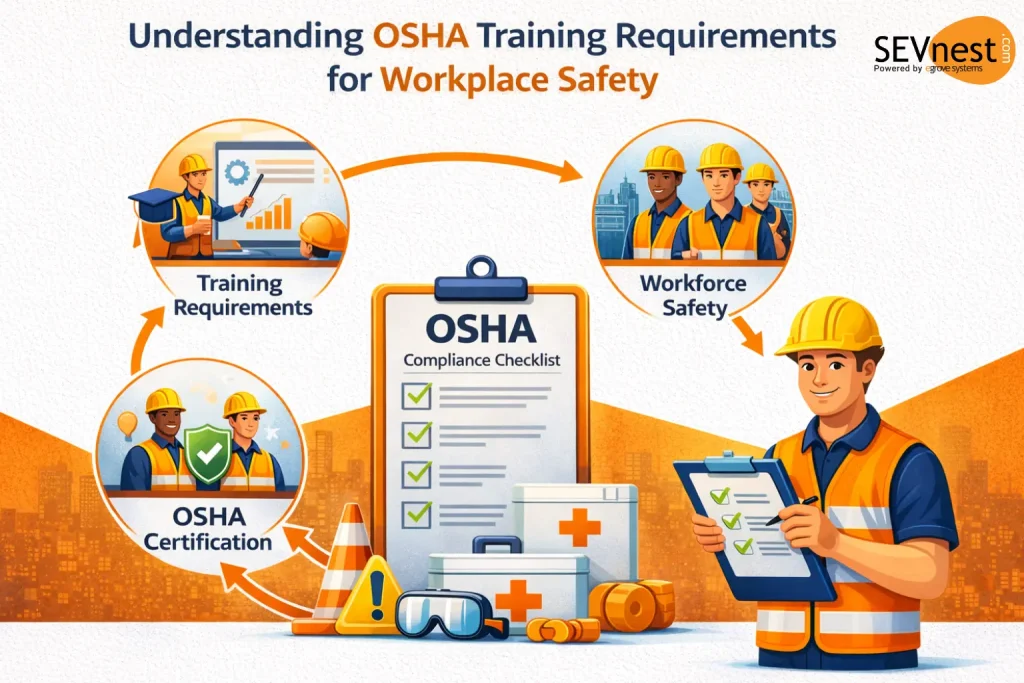
Employees receive education on workplace hazards and regulatory expectations through OSHA compliance training. It applies across industries, including manufacturing, healthcare, construction, logistics, and corporate environments.
The Occupational Safety and Health Administration continues to emphasize employer responsibility in hazard communication, employee training, and documentation compliance, reinforcing the importance of structured safety education across all industries.
What OSHA Compliance Training Covers
OSHA compliance training typically includes:
- Hazard communication standards
- Emergency response procedures
- Equipment handling protocols
- Fall protection and PPE usage
- Reporting and documentation processes
Mandatory safety training ensures that employees understand both general and job-specific safety risks.
Why Requirements Continue to Evolve
Workplace environments are constantly changing due to:
- Automation and machinery updates
- Remote and hybrid work models
- Industry-specific safety regulations
- Updated OSHA enforcement priorities
Structured OSHA compliance training helps organizations adapt to these evolving requirements without confusion.
Documentation and Audit Readiness
Workplace safety compliance depends heavily on documentation. Employers must maintain:
- Training attendance records
- Certification logs
- Policy acknowledgment confirmations
Failing to document mandatory safety training can result in penalties, even if safety policies exist.
OSHA compliance training mitigates workplace incidents and regulatory exposure by informing employees and organizing documentation before inspections.
SEVnest supports centralized tracking and structured OSHA compliance training frameworks, helping organizations maintain audit readiness at all times.
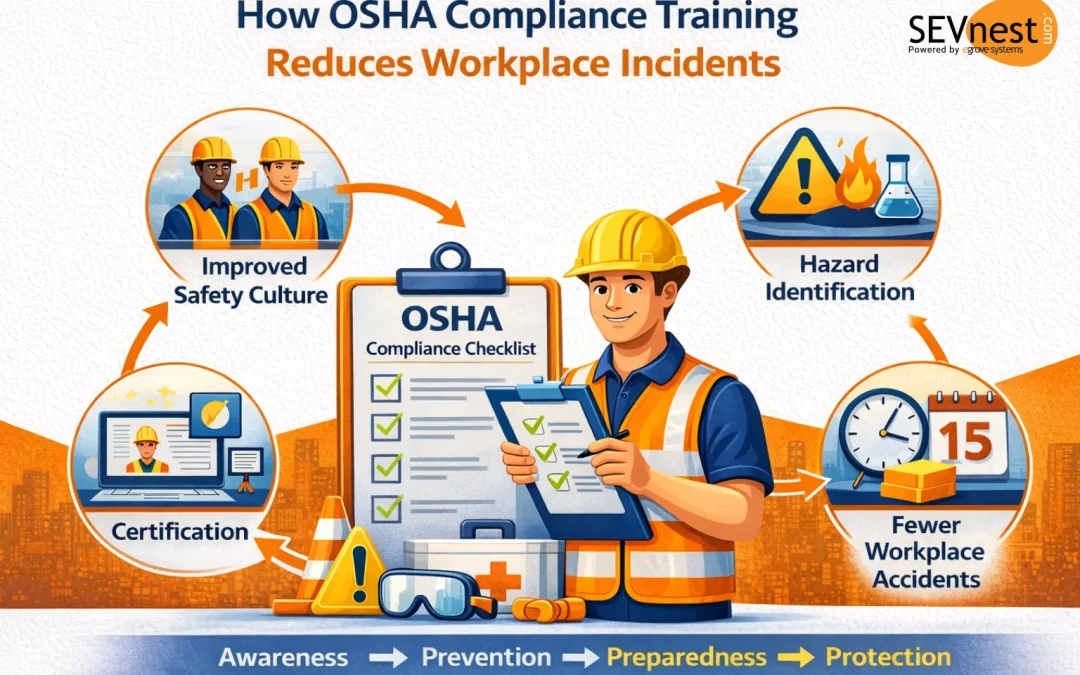
How OSHA Compliance Training Reduces Workplace Incidents
Most workplace incidents are not caused by malicious intent; they occur due to a lack of awareness or inconsistent training.
Understanding how OSHA compliance training reduces workplace incidents helps organizations focus on prevention rather than correction.
Building Hazard Awareness
Employees who complete OSHA compliance training learn to:
- Identify unsafe conditions
- Recognize improper equipment usage.
- Report early warning signs.
- Follow structured emergency protocols
Awareness is the first step toward prevention.
Encouraging Responsible Behavior
Mandatory safety training reinforces:
- Proper lifting techniques
- Chemical handling procedures
- Machine lockout protocols
- Fall protection standards
When safe behaviors become routine, incident frequency declines.
Reducing Operational Disruption
Workplace safety compliance impacts more than injury rates. It influences:
- Productivity
- Insurance costs
- Brand reputation
- Employee morale
OSHA compliance training supports business continuity by minimizing avoidable disruptions.
Strengthening Reporting Culture
Employees often hesitate to report hazards. Structured OSHA compliance training emphasizes that early reporting prevents escalation.
Organizations that understand how OSHA compliance training reduces workplace incidents build transparency and accountability across teams.
SEVnest enables structured OSHA compliance training programs designed to reinforce awareness without overwhelming employees.
Building a Long-Term Safety Culture Through Mandatory Safety Training
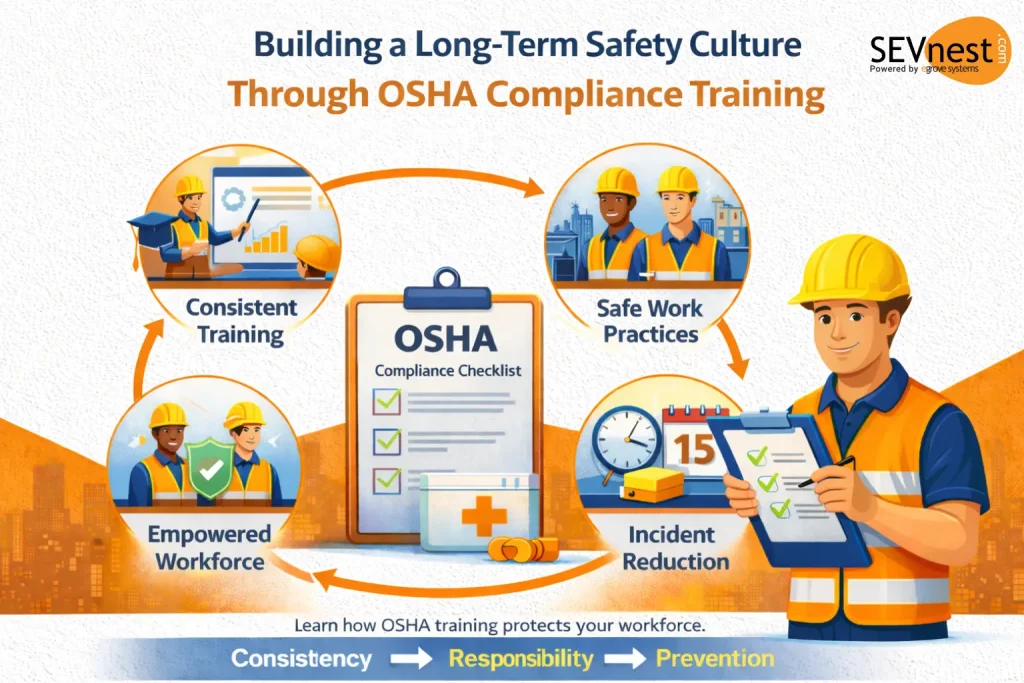
Compliance is built through consistency, not a single effort.
Mandatory safety training supports the development of a sustainable safety culture where employees:
- Understand their responsibilities
- Recognize safety as shared accountability.
- Follow the consistent reporting procedure.
- Engage proactively in risk prevention.
Prevention Starts With Education
OSHA compliance training transforms policy documents into practical action. When employees understand how OSHA compliance training reduces workplace incidents, they make informed decisions in real time.
Leadership Visibility and Oversight
Workplace safety compliance requires executive oversight. Structured mandatory safety training programs provide:
- Training completion reports
- Role-based training progress tracking
- Compliance performance dashboards
- Risk gap analysis and identification
This visibility supports strategic decision-making.
Supporting Growth and Expansion
As businesses expand into new locations or add new operational processes, OSHA compliance training ensures safety standards remain consistent.
SEVnest supports organizations by centralizing OSHA compliance training management, strengthening audit readiness, and reinforcing compliance across departments.
Final Thoughts: Strengthening Workplace Safety in 2026
By investing in structured mandatory safety training, organizations shift from reactive incident management to proactive risk prevention. With centralized tracking, audit-ready documentation, and consistent employee engagement, OSHA compliance training becomes a strategic safeguard, not just a regulatory requirement.
SEVnest supports organizations in building structured OSHA compliance training programs that strengthen compliance posture and long-term operational stability.